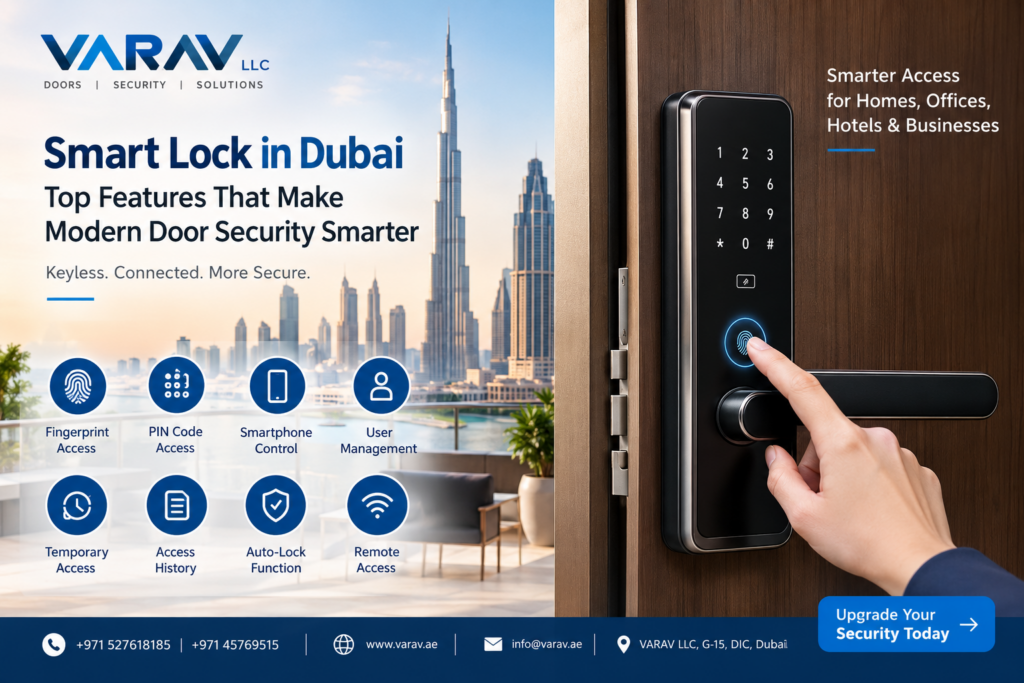
“Your door can be smarter without making your everyday routine more complicated.”
What if opening your door could be as simple as using your fingerprint, entering a code, or tapping your phone? Traditional keys have served homes and businesses for generations, but modern technology is changing how people think about everyday door access. Smart locks bring digital features into a task that was once completely mechanical, offering new ways to unlock, secure, and monitor an entry point. From keyless access and temporary codes to app-based controls and biometric options, these systems are designed to make security more convenient without making daily routines complicated. In this blog, we will explore how technology is making door security more convenient, what smart locking systems can offer, and what to consider before choosing a Smart locks in Dubai for your home, office, apartment, or rental property.
A smart locks is a type of lock that takes digital technology into the real world of door access. It works in addition to the traditional key and can unlock and secure a door using various methods, including fingerprints, passcodes, smartphones, and other digital methods. Some locks can also offer access records and user management, depending on the model.
Traditional keys are easy to use but can be lost, duplicated, forgotten, or shared with others. Households, offices, rental properties, and shared spaces can benefit from smart locks, which offer alternative access control methods. Users can select the way they want to access the systems, but do not necessarily have to store a physical key for everyday use.
Many of the smart locks available today have a feature that allows them to be opened using a fingerprint. The system identifies a registered fingerprint and provides access without the user having to remember any code or carry any key. This can be very convenient for people who get in and out of a home on a regular basis.
The number of fingerprints that a lock can hold varies by model, so purchasers should confirm this feature when multiple people must be able to access the lock frequently.
“A smart lock turns a simple entrance into a more manageable access point.”
Passcodes are the digital equivalent of physical keys. Useful for families, employees, guests, and shared property, a user can enter a selected PIN on the lock’s keypad to gain access. Some smart locks also have various codes for different users or situations.
This can be particularly helpful if access needs to be modified frequently without the need to install a new lock.
For smart locks that are compatible with a smartphone, they can provide another digital means of access. A dedicated application or supported wireless technology can enable users to unlock the door, lock it, or control some settings from their mobile phone. This can be very handy for those who carry their cell phone around all day anyway.
The functions available are based on the specific lock and connectivity system in use, so it’s crucial to verify the capabilities of the lock you want to purchase before making the selection.
Access to a smartphone can involve
Smart locks can make things easier in instances where someone else has to get into the home. Users can sometimes give a temporary passcode or provide an electronic permission slip instead of a spare key. This might be helpful for guests, maintenance staff, housekeeping, employees, or tenants, who might only need access for a short time.
If entries can be removed or changed later, this can also help manage shared entry.
Certain smart locks are compatible with mobile apps, hubs, Wi Fi systems, wireless, or other smart home technologies. As an added advantage, if remote connectivity is available, it allows users to monitor the status of the lock even if they are not onsite. This can be useful when you don’t know if the door was locked when they left.
Each model comes with different remote functions and features, so it is important to check the remote functionality and the features of the lock you are interested in.
Remote functions can include, but are not limited to:
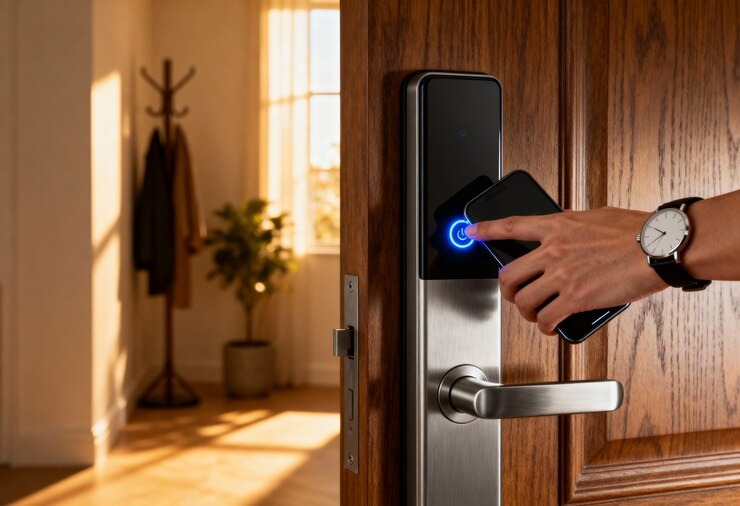
A modern door lock is no longer limited to a key and a mechanical mechanism. With options such as fingerprints, passcodes, smartphone access, temporary permissions, and remote monitoring, smart locking systems can make everyday entry more flexible while adding useful control over who can access a property. The right system depends on the type of door, number of users, preferred access method, and features needed for daily use. For homes, offices, apartments, and rental properties, exploring a smart locks in Dubai and understanding these practical features can help make the move towards smarter door security more informed and convenient.
A smart lock is an electronic door-locking system that allows access through methods such as fingerprints, passcodes, smartphones, cards, or other digital credentials instead of relying only on a traditional key.
Many smart locks support completely keyless entry through fingerprints, PINs, smartphone apps, or cards. Some models may also include a mechanical key or emergency access method as a backup.
Smart locks use different technologies and security features depending on the model. Access codes, biometric verification, automatic locking, activity records, and user permissions can provide additional access-control options.
Many smart locks provide low-battery warnings before power is depleted. Depending on the model, emergency power access, backup keys, or other recovery methods may be available.
Consider the door type, preferred access method, number of users, connectivity, battery system, installation requirements, and additional features. For those comparing a Smart lock in Dubai, checking these factors can help identify a model that fits their daily access and security requirements.