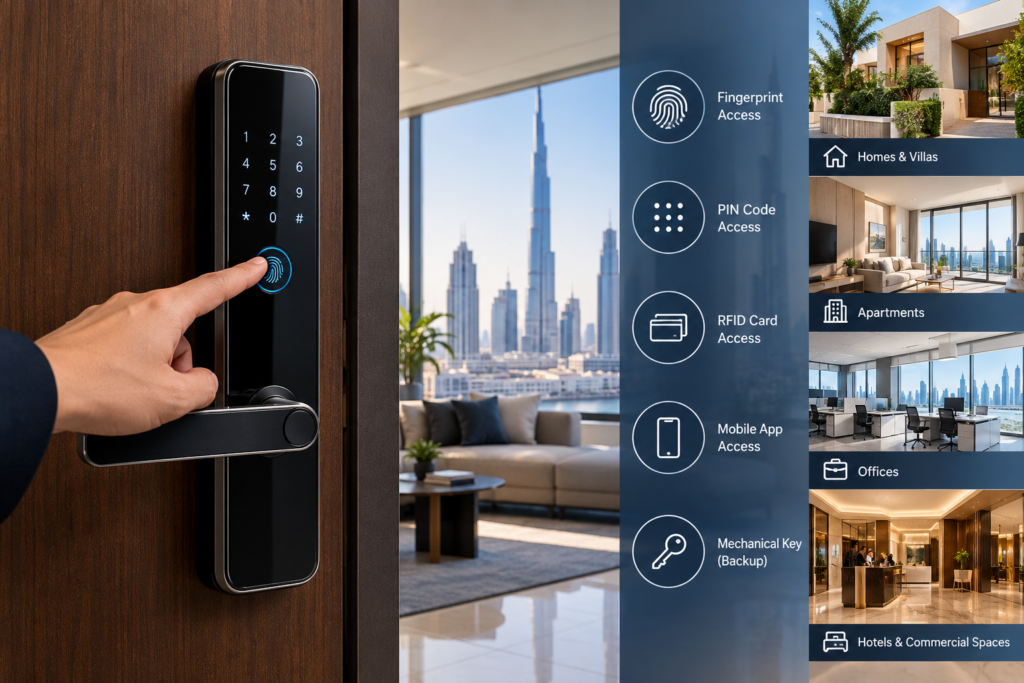
Smart locks are becoming a practical choice for homeowners, offices, hotels and commercial properties looking for convenient door access. They allow users to unlock doors using PIN codes, fingerprints, access cards, or mobile applications depending on the model. However, before investing in smart locks, it is important to check whether your existing doors can support the chosen locking system. Not every door is suitable for every smart locks Dubai. Factors such as door thickness, material, lock configuration, alignment, and power requirements can influence installation and performance. Checking these details in advance can help avoid compatibility issues, unnecessary modifications, and additional expenses.
Let’s dive into this blog to explore a pre-installation checklist and find out whether your doors are ready for smart locks.
“A smarter lock works best when every installation detail is in place.”
The first step is to identify the material and thickness of your door. Smart locks are available for different door types, but each model has specific installation requirements. A lock designed for a wooden entrance may not fit a glass or metal door without a compatible mounting system. After that, door thickness is equally important because some smart locks are designed for a limited thickness range, while others support adjustable fittings. Measure the door accurately and compare the dimensions with the manufacturer’s installation specifications. Choosing a compatible model from the beginning can reduce drilling, cutting, and other modifications during installation.
The ease of the smart lock installation can be determined by your current locking system. There are models that provide a replacement lock, and others that match locks or locking mechanisms. The decision to buy hardware is best made after looking at the current hardware. Notice the following parts:
A standard smart lock isn’t necessarily compatible with a door with a particular mortise locking system. Adding an incompatible model may require extra equipment or help. If you don’t know what the current locking mechanism is, talk to a qualified installer or smart lock supplier before you choose a smart lock.
A smart lock will not make a hard-to-open door easy. If the door is sticking, rubbing against the door frame, or taking too much force to shut, these can be issues and must be fixed prior to installation. The locking mechanism will engage normally with the door if it is aligned, and ensures that the lock motor is not over-engaged.
The locking bolt may not move freely in the assembly if the hinges are loose, the strike plate is not properly aligned, or the wooden door is swollen. This resistance could include all automatic locking and unlocking systems that use motorised smart locks. Repair as needed prior to installation of the new system. When smart locking is installed in an older building, it’s especially important to check the door frame, as conditions and alignment could change over time.
Many smart locks operate using batteries, while some models may require a wired power supply. Understanding the power requirements before installation helps you prepare for regular use and unexpected situations. Battery-operated smart locks are often suitable for homes and existing buildings because they usually do not require extensive electrical work. Wired models may be more appropriate for certain commercial installations, depending on the building’s access control requirements.
Smart locks do not all have the same backup functions. Some have rechargeable batteries, and others have a different means of access, like disposable batteries. Select a type of model with a backup option that fits your premises and ensure all who have access to the premises know how to use the backup model.
There are various levels of connectivity available with smart locks. Some do not depend on any external control source and rely on PIN codes or fingerprint recognition, while others are linked to a smartphone, home automation system or central access control system. Determine what functions you need before installation.
If remote access is a necessity, find out how well the area supports the bit of code or determine if there is a need for extra equipment. Additionally, make sure to check for compatibility with your current home or building automation system.
Before installing smart locks, evaluate the protection features offered by the model and how they suit the property’s level of risk. Look for features such as encrypted communication where applicable, secure user authentication, automatic locking options, and alerts for unauthorised access attempts. See if the manufacturer makes software that can be updated and gives clear instructions for the use of access credentials.
In commercial premises, hotels and multi-occupancy buildings, please check with the building management team. The lock selected should be appropriate for the purpose it is going to be used for and meet safety regulations.
After performing a thorough door inspection and determining what attributes will best help you, the next step will be installation planning. The price of a smart lock installation can be more than just the price of the smart lock.
“Choose smart locks that fit your door, match your needs, and support your security goals.”
Preparing your door properly is an essential step towards getting the best performance from a new locking system. From measuring door thickness and inspecting existing hardware to checking power requirements, connectivity and emergency access, each detail contributes to a more reliable installation. Before purchasing smart locks Dubai, assess your door’s material, condition, locking mechanism, and intended use. Choose a model that meets the manufacturer’s specifications and provides the access features your property genuinely needs. When compatibility is uncertain, seek advice from an experienced supplier or installer. Taking time to complete these checks before installation can also reduce avoidable modifications and help you make a more informed investment in modern door security.