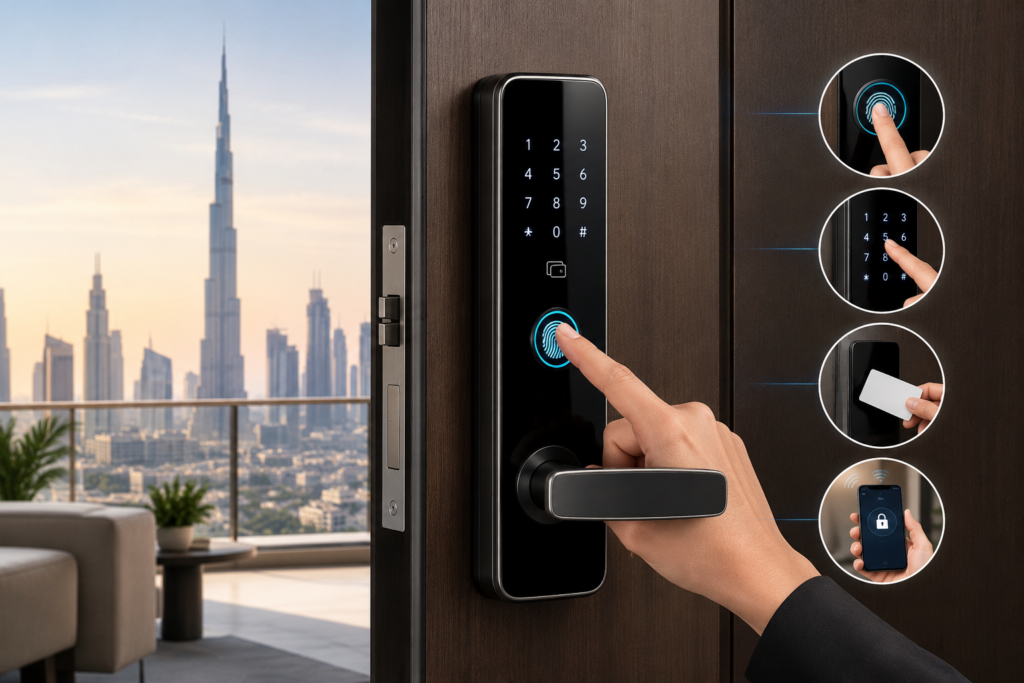
“Smart security is not just about locking doors; it is about managing access wisely.”
Not every door needs to lock itself every time someone walks through it. In busy homes, office, an comercial spaces, repeatedly unlocking a door can interrupt everyday movement, especially when people need frequent access throughout the day. Passage mode is a feature available on some smart locks that allows a door to remain unlocked until the mode is disabled or another setting takes effect. Understanding how this function works can help property owners decide when convenient access is appropriate and when tighter entry control is necessary. When exploring Smart Locks in Dubai, it is useful to compare available operating modes, user permissions, and security features to find a system that fits the property’s daily access requirements.
Passage mode is to temporarily alter the way a smart lock works, which means it will stay unlocked rather than needing to be authenticated for every entry. This mode can be activated by using an application, keypad, authorised credential, or any other supported control, depending on the model. The actual behaviour may differ from product to product, so it is advisable to confirm how the chosen lock deals with the passage mode before use.
Certain entries are accessed multiple times during a day, creating a problem that is difficult to deal with when frequent authentication is required. When access to a staff entrance, internal office door, or shared household doorway may need to remain easy for a specific time, this might be useful for passage mode. But it is not appropriate for all commonly used doors to be unlocked. The decision must be made based on who the door is to be used by, what it is to guard, and if another access would be more appropriate.
Passage mode and automatic locking are not the same. Passage mode is used to open the door without re-authentication until it is closed; automatic locking closes the door after the occurrence of a specific event or period of time, depending on the model. Knowing the difference will assist property owners in selecting settings that provide the right level of access while being convenient.
When using passage mode, it can be deceptive in terms of security, as it may eliminate the need for authentication of each person entering an entrance. It is crucial, therefore, for property owners to know who can trigger the feature and who can deactivate it. Access and control will depend on the model, and should be checked prior to everyday use.
Even if it becomes easier to move through the passage, it also can alter the security of the space beyond the door. This will depend on the location of the door, the users of it, and the impact of unauthorised access. An unlocked door may not be suitable for an external door or entrance onto sensitive areas, even if it is heavily used.
The way that smart locks organise the mode of passage and accompanying access settings differs. Some have controls on their app; others might have physical controls or keypad controls. Before installation, these set-ups should be checked to get an idea of what can be adjusted and if there are controls available to suit the user’s daily routine. This also makes people feel less confused if several individuals are responsible for the door.
There can be multiple doors with different access restrictions on a property. An internal doorway can be necessary to have a convenient passage, and a main entrance or storeroom or office with sensitive materials may have to be kept locked. A single setting on all doors might not be the best compromise of convenience and security. An individual evaluation of each entrance assists in developing an appropriate access system.
A smart lock may develop problems because of worn components, damaged electronics, battery issues, or changes in door alignment. While some faults can be resolved through simple troubleshooting or professional repairs, recurring failures may make replacement a more practical option. When evaluating Smart Locks in Dubai, understanding the difference between a repairable issue and a serious hardware problem can help property owners make informed decisions.
|
Smart Lock Problem
|
Repair or Replacement Consideration
|
|---|---|
|
Frequent battery drain
|
Check battery quality, settings, and power consumption before considering replacement.
|
|
Repeated fingerprint failures
|
Clean the sensor and check its settings; consider replacement if the sensor remains faulty.
|
|
Damaged internal electronics
|
Request a professional assessment to determine whether repair is possible or replacement is more practical.
|
|
Broken keypad or touchscreen
|
Repair may be suitable if compatible parts are available; replacement may be necessary if damage is extensive.
|
|
Repeated locking failures
|
Check door alignment, the locking mechanism, and the motor before deciding to replace the unit.
|
|
Replacement parts unavailable
|
A new lock may be more practical when essential components are no longer obtainable.
|
|
Repeated repair expenses
|
Compare the total repair cost with the cost and expected service life of a suitable replacement.
|
Choosing the right smart lock involves understanding how its features fit your daily routine, security requirements, and property layout. From managing passage mode to recognising when a faulty lock needs professional attention, informed decisions can help maintain convenient and controlled access. Before selecting Smart Locks in Dubai, compare the available functions, door compatibility, backup access options, and after-sales support. A suitable smart lock should offer practical operation while allowing you to maintain the level of security your property needs.
Passage mode allows a compatible smart lock to remain unlocked for convenient movement without requiring repeated authentication.
No. It may suit selected internal doors or supervised busy areas, but entrances requiring continuous access control should generally remain secured.
Yes, on compatible models, users can disable it through the supported control method. Check the manufacturer’s instructions for the exact procedure.
Replacement may be appropriate when essential components are damaged, security support has ended, spare parts are unavailable, or recurring repair costs become excessive.
Check door compatibility, available access methods, battery backup options, security features, passage mode settings, warranty coverage, and technical support.