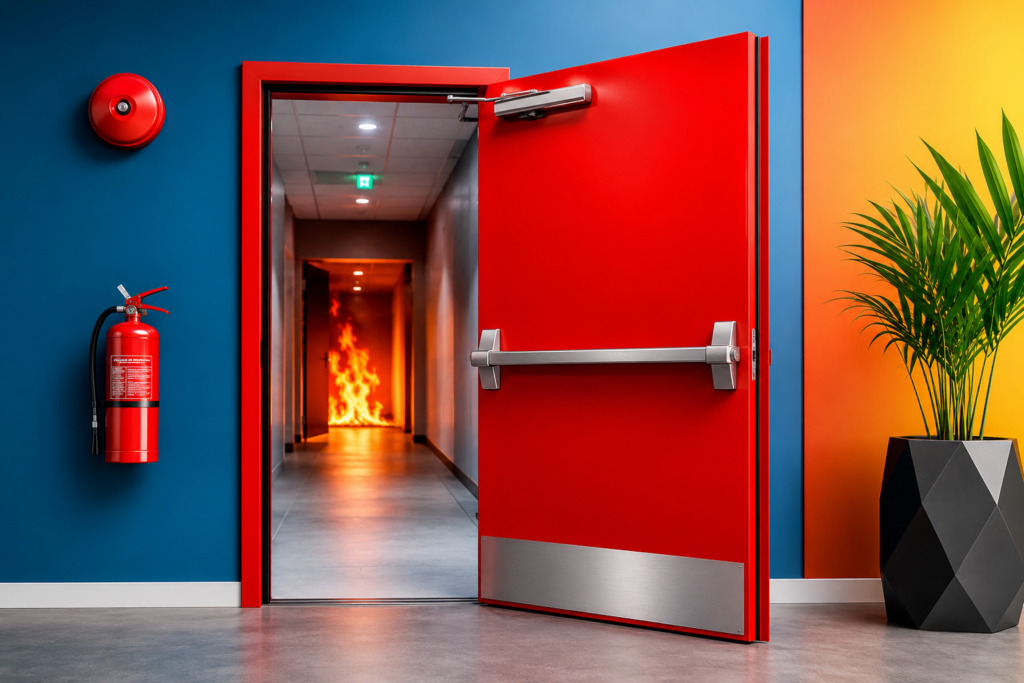
“Safety is built into every layer of a building, and fire rated doors are among its most trusted guardians.”
A building’s safety is often defined by the protective systems that go unnoticed until they are needed most. Among these essential safeguards, fire-rated doors stand as a critical defence against the rapid spread of fire and smoke, helping to protect occupants, assets, and evacuation routes during emergencies. More than just entryways, these specially engineered doors play a vital role in passive fire protection and regulatory compliance. As experienced fire-rated door suppliers in Dubai, we recognise the importance of delivering fire-resistant solutions that contribute to safer, stronger, and more resilient structures.
This guide explores everything you need to know about fire-rated doors and why they are indispensable in modern construction. In this blog, we are going to explore everything you need to know about fire-rated doors.
Fire rated doors are not created equal. Fire resistance ratings are the number of minutes a door has to resist fire damage and still perform according to the requirements of the code.
The ratings aid the building owner and designer in choosing doors that meet safety goals and comply with code.
A fire rated door is more than just a reinforced door panel. It is a system with several components that are integrated to give a reliable fire protection system. Each component is important to the effectiveness of the door.
It has a set of key features that must be incorporated:
Fire rated doors are strategically placed across the building to provide maximum safety and containment.
They are located based on the risks, the number of people who will use the building, and the fire safety requirements for the building.
Commercial Buildings
Valuable equipment and many occupants may be in an office space. Fire rated doors provide compartmentation of work areas and protection for evacuation routes.
Healthcare Facilities
Reliable fire containment is a must for hospitals that need to protect patients, staff, and important medical equipment.
Educational Institutions
Fire rated doors are installed in schools and universities to enhance the safety of their classrooms, laboratories, corridors and stairs.
Hotels & Hospitality Spaces
In an emergency, fire rated doors ensure the safety of guests and the safe escape routes.
Industrial Facilities
Commercial premises, such as factories and warehouses, may have hazardous materials and equipment which necessitate greater fire protection.
Residential Buildings
Fire rated doors are installed in apartment complexes and residential towers to make sure the occupants are safe and to help contain a fire emergency.
Fire emergencies can have many aspects that can pose risks to occupants as well as property owners. Fire rated doors have been created to combat these worries.
Rapid Fire Spread
Open spaces and interconnected rooms can allow flames to move quickly throughout a building. Fire rated doors provide barriers to this progression and enhance containment.
Smoke Migration
Smoke can move faster than flames and can have a profound effect on evacuations. Fire rated doors can limit the spread of smoke and enhance visibility.
Unsafe Escape Routes
Evacuation must be through protected stairwells and corridors. Fire rated doors contribute to making these walkways safer for extended use.
Property Damage Risks
Fire can result in significant damage to equipment, inventory and infrastructure if it’s not contained. Fire rated doors help minimize losses.
Structural Integrity Concerns
Fire rated doors offer many benefits other than fire protection. Their performance helps ensure the overall safety of the building, its ongoing operation, and long-lasting resilience.
There are a number of key factors to consider when choosing the right fire rated door.
|
Feature
|
Contribution to Fire Safety
|
|---|---|
|
Fire Resistance
|
Helps contain flames within designated areas
|
|
Smoke Protection
|
Restricts the movement of harmful smoke
|
|
Safe Evacuation
|
Supports protected escape routes
|
|
Structural Safety
|
Reduces the impact of fire on building sections
|
|
Asset Protection
|
Helps minimize damage to equipment and property
|
To keep fire rated doors providing fire protection for the life of the door, regular maintenance is necessary. Routine inspections can be used to detect problems in advance of their impact on safety performance.
Over time, wear and tear can impact the effectiveness of fire rated doors. Early detection of warning signs helps prevent safety problems.
“A fire rated door is more than a building component—it is a critical safety barrier that protects lives, assets, and evacuation routes when every second counts.”
Also read this: Looking for Better Security? Start with Experienced Smart Lock Suppliers
Fire safety is not just about meeting regulations; it is about creating environments that can effectively protect people, property, and critical operations when unexpected situations arise. Fire rated doors serve as one of the most dependable components of passive fire protection by helping contain fire, control smoke movement, and maintain secure evacuation routes. Their ability to provide valuable response time during emergencies makes them an essential investment for modern buildings across commercial, industrial, residential, and institutional sectors. As trusted Fire Rated Door Suppliers in Dubai, we are committed to delivering certified fire protection solutions that support long-term safety, compliance, and peace of mind. By choosing high-quality fire rated doors and ensuring proper installation and maintenance, building owners can create stronger, safer, and more resilient spaces prepared for the challenges of the future.
Fire rated doors help contain fire and smoke within specific areas, allowing occupants more time to evacuate safely while reducing damage to the building and its assets.
Yes, fire rated doors are commonly installed in apartments, villas, and residential complexes to enhance fire protection and improve occupant safety.
A standard door is not designed to withstand fire exposure, whereas a fire rated door is tested and certified to resist fire and smoke for a specific duration.
Regular inspections should be conducted to ensure seals, hinges, frames, and closing mechanisms remain in proper working condition and continue to meet safety requirements.
Certification confirms that the door has undergone rigorous testing and meets recognized fire safety standards, ensuring reliable performance during emergencies.