“A lock protects a door, but the right access system should also fit the way you live.”
A lock does more than keep a door closed. It decides how people enter, who gets access, and how easily that access can be managed. A normal lock depends mainly on a physical key, while a smart lock can introduce options such as fingerprints, passcodes, cards, or smartphone access. The difference is not simply about replacing a key with technology; it can also change how access is shared, monitored, and handled in everyday situations. In this blog, we will compare normal lock vs smart lock, looking at their access methods, convenience, security features, maintenance, and practical differences. Understanding these points can help buyers make a more informed choice and also make it easier to compare products offered by reliable smart lock suppliers in Dubai.
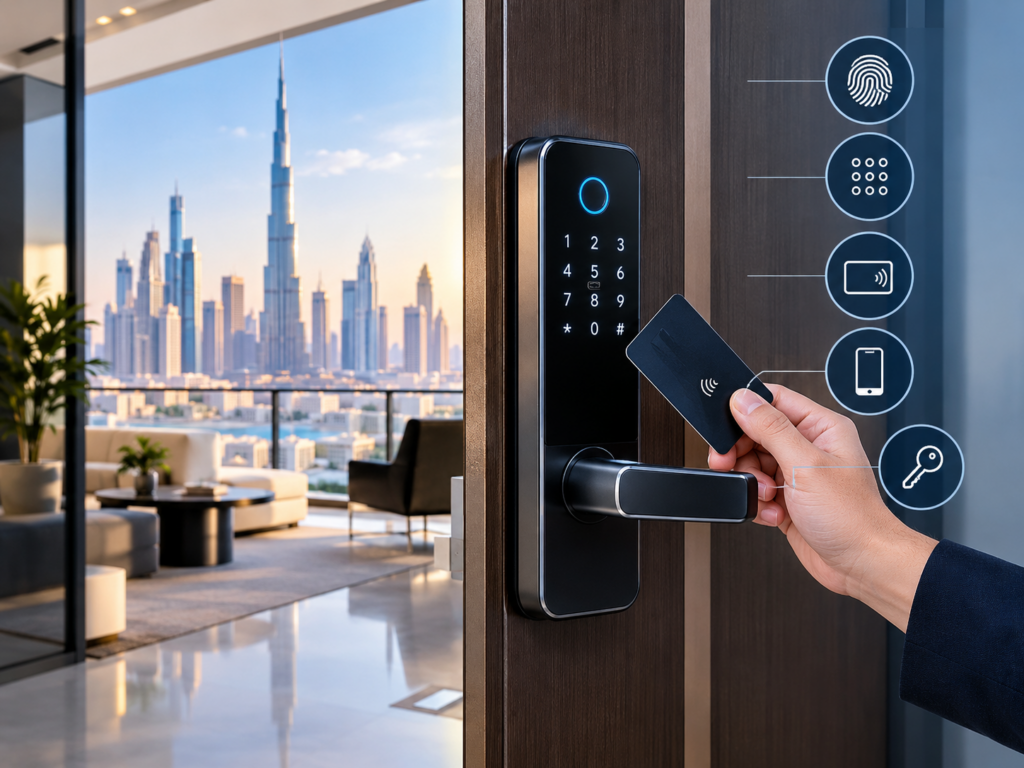
The key difference between a normal lock and a smart lock is how the door is unlocked. In a typical lock, a physical key is needed to fit into the locking mechanism, whereas a smart lock system provides electronic access using a fingerprint, passcode, card, or a linked smartphone. This alters the fundamental experience of accessing properties.
What type of access you put on the door may be determined by who you are and how often you use the door. Different access needs are likely to apply to a family home, an office with staff and leaseholders, and a rental property.
It’s also easy to use and understand, but it has to be carried and kept safe. Smart locks offer digital options, which can help minimize the use of physical keys in everyday scenarios. This can be especially helpful for individuals who often lose or misplace keys, or share them with others.
Digital access could also enable users to have more flexibility when multiple people are accessing the same property. Some smart locks can create different access codes, rather than making multiple copies of one key.
Normal locks make sharing easy if there is a spare key, but if there are a lot of people using the same door, then sharing can become tricky. Smart locks could even be used to issue individual cards to family, employees, tenants or guests, allowing them to control access without giving out keys.
Some models also offer temporary and/or scheduled access, the specific functions of which vary by lock. This is helpful if some individuals have only a short period of time to enter.
When you lose a traditional key, it can cause an immediate practical issue, particularly if you don’t have a spare key. If the owner has lost the key, he may need a replacement key, or he may choose to replace the lock if there is a problem about who may have found the lost key.
Normally,y a traditional lock will indicate if a door is open or closed but will not hold a digital record of the individual entry. Some smart locks can provide access activity using an app, letting the owner view information supported by the lock, such as access time and the credential that was used.
A standard lock might be fast and easy to use, but in daily life, it’s important to always have the right key. Smart locks allow for other entry methods, making certain routines easier. When it is not just a physical key, moving grocery bags, coming in late to the house, or handling access for others can be easier.
Everyday convenience can include:
Unlike a traditional lock, the electronic lock’s basic mechanical operation functions without batteries. Smart locks, however, rely on batteries or another power source to enable the use of electronic features. This is why battery monitoring is one of the essential functions of having a smart lock.
While a traditional lock might require a straightforward installation process, a smart lock could have more factors to consider due to its electronic technology and design. The type of door hardware, size, thickness, and lock type may require review if it is not suitable for the smart lock.
A normal lock and a smart lock may serve the same basic purpose, but the way they provide access and convenience can be quite different. A quick comparison makes it easier to understand which features are available with each type of lock.
|
Feature
|
Normal Locks
|
Smart Locks
|
|---|---|---|
|
Access
|
Physical key
|
Fingerprint, PIN, card or phone
|
|
Users
|
Separate keys are needed
|
Multiple users can be added
|
|
Guest Access
|
Temporary access codes can be used
|
Warehouses and industrial facilities
|
|
Security
|
Mechanical locking system
|
Digital and mechanical security options
|
|
Access History
|
Usually not available
|
Available in selected models
|
|
Remote Access
|
Not available
|
Available in selected models
|
|
Convenience
|
Simple and familiar
|
Keyless and more flexible
|
The difference between a normal lock and a smart lock is not only about how the door opens. It is also about how access is managed, how users are added or removed, and how much convenience and technology you want in your daily routine. A traditional lock can offer a simple mechanical solution, while a smart lock can provide options such as keyless entry, digital access, and selected monitoring features. Before making a change, consider your door type, number of users, preferred access method, maintenance needs, and backup requirements. Comparing suitable products from reliable Smart Lock Suppliers in Dubai can help you understand the available options and choose a locking system that fits your property and everyday requirements.
A normal lock generally uses a physical key and a mechanical locking mechanism, while a smart lock can provide electronic access through fingerprints, PINs, cards, smartphones, or other supported methods.
Many smart locks provide keyless access, but some models also include a physical key or another emergency entry method as a backup. The available options depend on the specific product.
Yes. Many smart locks allow multiple authorised users to be added through separate fingerprints, PINs, cards, or digital credentials, depending on the model.
Smart locks may require battery replacement or charging, sensor cleaning, software updates, and occasional checks of the mechanical parts. The exact maintenance requirements vary by model.
Consider your preferred access method, number of users, property type, convenience requirements, connectivity needs, maintenance expectations, and emergency access options. You can also compare products from Smart Lock Suppliers in Dubai based on these practical requirements before making a decision.